Brazil's mining boom is real. So is the war for talent behind it.
Brazil's mining boom is real. So is the war for talent behind it.
Brazil's mining sector isn't just growing, it's accelerating at a pace few other resource markets can match. The country is projected to draw US$76.9 billion (R$394.5 billion) in mining investment between 2026 and 2030, a jump of roughly 12.5% compared to the previous five-year cycle, with critical minerals like lithium and rare earths alone accounting for approximately one third of that pipeline. The sector generated US$58 billion (R$298.8 billion) in revenue in 2025, up over 10% year-on-year, and its mineral trade balance reached US$37.6 billion (R$192.9 billion), equivalent to 55% of Brazil's entire trade surplus of US$68.3 billion (R$350.4 billion) for the year.
But a boom this size doesn't stay contained to the mine site.
The opportunity in São Paulo.
While extraction happens in Minas Gerais, Pará, and the emerging Lithium Valley of the Jequitinhonha region, the capital that funds it, the deals that structure it, and the expertise that supports it are increasingly concentrated in São Paulo. As Brazil's financial and corporate hub, home to the B3 stock exchange where major mining players raise capital, and the corporate base for international operators managing their Brazilian and South American operations, São Paulo has become the command center of the mining boom, even without a single mine inside city limits.
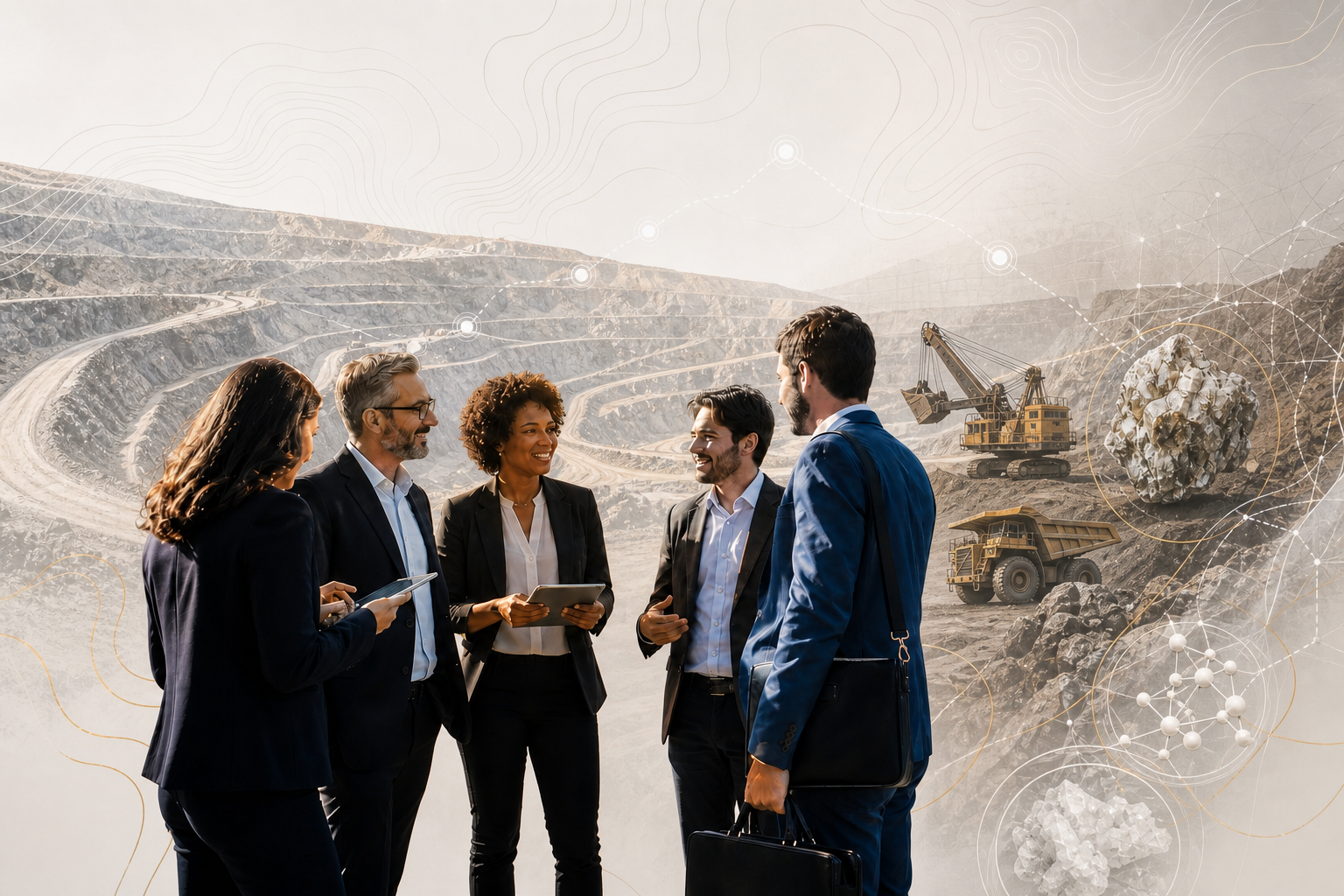
That means a fast-growing demand for talent that has nothing to do with a hard hat: finance and investment professionals structuring mining deals, legal and compliance experts navigating an increasingly complex post-Brumadinho regulatory environment, ESG and sustainability specialists responding to investor scrutiny, supply chain and logistics coordinators managing multi-state operations from a central hub, and corporate functions for the growing number of international mining companies establishing or expanding their Brazilian headquarters in São Paulo.
Two talent markets, one bottleneck
Brazil's mining talent challenge is really two separate markets colliding. On one side: technical, site-based roles, such as geologists, metallurgists, process engineers, concentrated in remote mining states and already in short supply. On the other: corporate, financial, and specialist roles concentrated in São Paulo, growing just as fast as capital continues to flow in.
The scarcity is not abstract. Brazil's universities produce a limited annual pipeline of mining engineers and geologists relative to the number of active and pre-production projects now competing for them. Specialists in lithium processing, rare earth separation, and tailings management are especially scarce, because these are relatively new specializations in Brazil's mining history, built around minerals the country has only recently begun extracting at scale. On the corporate side, ESG and sustainability roles
tied to mining are competing directly with the same skill set in demand across Brazil's broader finance and industrial sectors, and dam-safety and environmental-compliance expertise is concentrated in a small number of specialists who are now being pulled across multiple operators simultaneously. Operators and investors need both talent pools solved simultaneously, and most don't have a single partner who can do it.
A capital cycle this size moves fast, and the organizations that build their teams early are the ones positioned to execute as projects move from investment announcement to production. Waiting until a deal closes or a mine breaks ground to start hiring means competing for talent at the exact moment everyone else is doing the same.
Why partner with Aldelia
With on the ground teams in Rio de Janeiro and São Paulo, Aldelia is built for exactly this kind of dual-market challenge. Rather than choosing between a technical recruiter and a corporate one, operators and investors get a single workforce partner who understands both sides of Brazil's mining story — and can move as fast as the capital does.
But sourcing talent is only the first problem this boom creates. Once the right people are identified, getting them where they're needed, and keeping them compliant, paid, and supported, is its own operational challenge, and it's where many organizations lose the time they gained by hiring quickly.
Mobility, solved.
When expertise needs to be brought into the site, Aldelia manages the mobility end-to-end: work authorization, relocation logistics, housing coordination, and on-site onboarding, so a hiring decision turns into a mobilized workforce in weeks, not months. Our outsourcing model means operators draw on a standing, flexible workforce instead of rebuilding a hiring and compliance process from scratch in every new state.
Beyond recruitment, the full workforce lifecycle.
Talent acquisition solves the "who." It doesn't solve the "how do we manage them." As mining projects move through distinct phases — exploration, construction, ramp-up, production — headcount needs shift just as fast, often across multiple states at once. Aldelia's outsourcing and temporary staffing model lets operators scale technical and corporate teams up or down by phase and by location, without carrying permanent overhead once a phase winds down. Our workforce management services handle the ongoing administration that comes with operating across jurisdictions: contracts, statutory compliance, benefits, and reporting, across a regulatory environment where tailings and dam-safety oversight has only grown stricter in recent years.
The result: one partner covering sourcing, mobilization, payroll, compliance, and workforce administration, so the mining boom's talent bottleneck doesn't become an operational one too.
If you're building a team for Brazil's mining boom, let's talk.